During periods of crisis, instability, or political polarisation, public safety challenges rarely stay within neat institutional boundaries.
This is particularly true in Lebanon, where local authorities are often asked to respond to displacement, public order concerns, service disruption and emerging protection risks. These pressures are usually part of a wider security picture, making interoperability between municipal police and the ISF a core part of crisis readiness.
Both local and central security actors bring essential capabilities. Municipal police are often the first to detect changes in community dynamics, while the ISF brings the national reach, intelligence, legal authority and operational capacity needed to connect local incidents to broader patterns and ensure a consistent response. When these strengths are connected, local insight can inform national response, and national capacity can reinforce local action.
Lebanon already has formal and informal coordination structures linking local and national security actors. The challenge is ensuring these arrangements work quickly, consistently and predictably under pressure.
Fragmented communication between local and central actors can cost precious time. Field-level concerns may not reach decision-makers quickly enough, while national-level instructions may not cascade clearly to officers on the street. As safety risks increasingly cross municipal boundaries — through displacement, organised crime, rumours or communal tensions — coordination cannot depend on ad hoc escalation or personal relationships alone.
Effective interoperability requires shared systems, agreed protocols, and clear lines of accountability. Technology can support this by enabling real-time information sharing and a common operational picture, but it must be matched with institutional arrangements that define who reports what, who decides, who acts and how decisions are communicated.
This is especially important during politically sensitive moments. In Lebanon, the ISF can serve as an important moderating institution during periods of polarisation and crisis. By upholding the rule of law and providing a national framework for public security, it can help mitigate tensions, preserve social cohesion and reinforce confidence in state institutions when they are needed most. This role is significant for municipalities, which often face the direct consequences of local tensions and emerging crises. A strong and trusted national police service can provide support, coordination and stability at the local level, enabling municipalities to focus on service delivery, community engagement and local development while benefiting from a coherent and consistent security framework.
With the right coordination structures in place, municipal autonomy and national coherence can reinforce each other. Comparable multi-agency response models offer useful reference points, provided they are treated as prompts rather than templates. The UK’s Joint Emergency Services Interoperability Principles, for example, emphasise communication, coordination, shared situational awareness, and joint understanding of risk, while US incident management models highlight common terminology, unified command, and the need for agencies to work toward shared objectives without losing their distinct mandates. In Lebanon, these lessons connect with ongoing municipal police reform and community security efforts, which have already focused on professionalising municipal police, strengthening ISF service delivery, and clarifying oversight and accountability. The practical lesson is clear: complex incidents require local and national actors to share information, make decisions through agreed structures, and act coherently while preserving their respective roles.
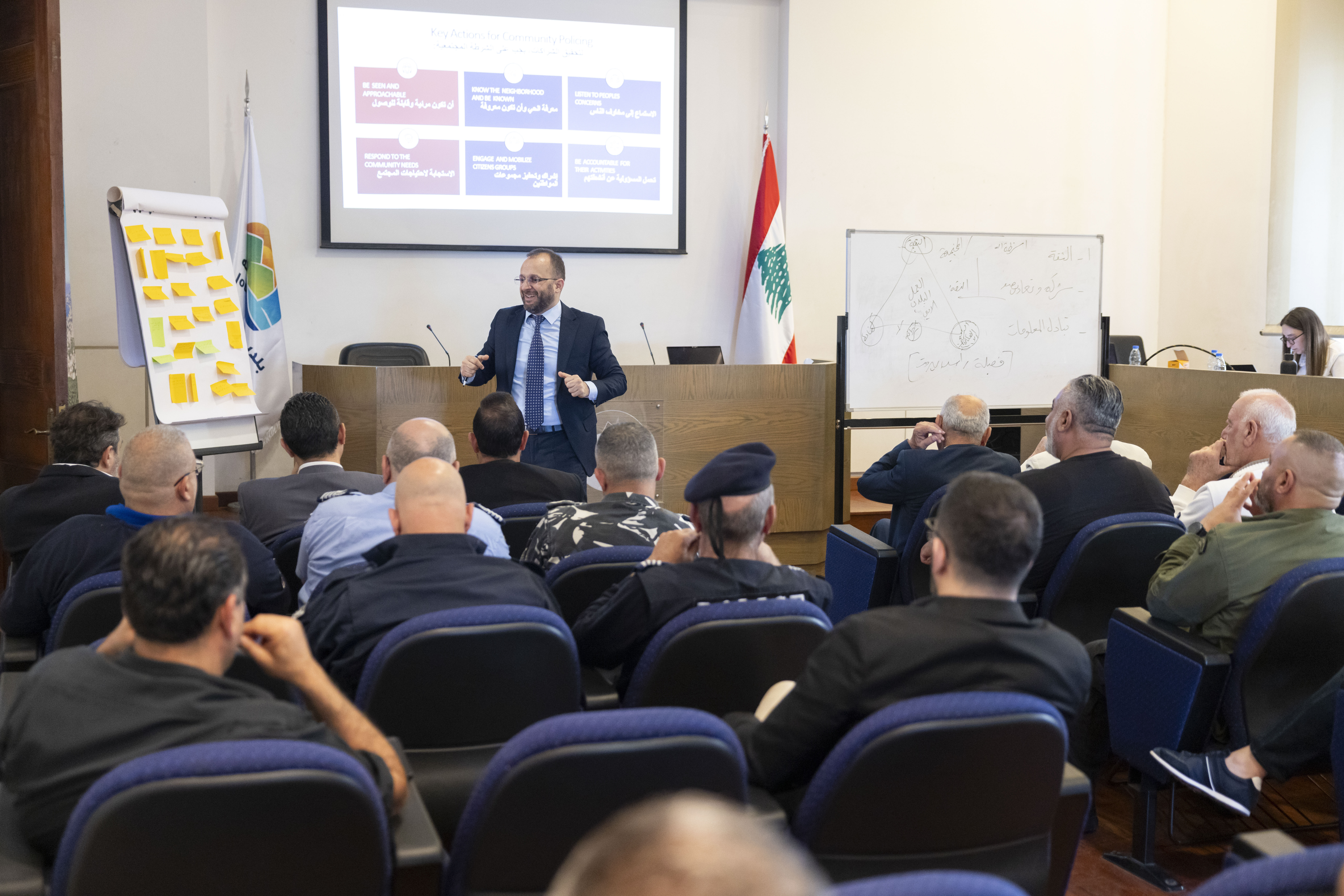
Siren recently facilitated a Community Policing Workshop that brought together representatives from the ISF, municipal leaders and municipal police from across Keserwan to discuss these coordination challenges in practical terms.
The discussion surfaced a set of questions that are central to strengthening municipal police–ISF interoperability:
How can Lebanon strengthen joint command frameworks that respect municipal autonomy while ensuring national coherence?
What legal and operational reforms are needed to clarify roles, responsibilities and accountability between municipal police and the ISF?
How can technology bridge operational gaps through real-time information sharing without creating new vulnerabilities?
In moments of crisis, who decides — and how quickly can that decision cascade to street level?
Participants also pointed to several areas where progress could be made. Joint training can help municipal police and ISF officers build trust, develop a shared operational language and practise coordination before crises occur. Secure, interoperable systems can support real-time information sharing and a common operational picture, while clear access controls and data protection safeguards help reduce operational and security risks. Shared crisis playbooks can clarify escalation thresholds, roles, responsibilities and command arrangements, provided they are tested through exercises, refined through after-action reviews and owned by both local and central actors.
Taken together, these lines of exploration point toward an emerging reform agenda for donors and security practitioners: helping local and national actors share information earlier, make decisions faster and respond more coherently when communities are under pressure.